Freelancers’ lunch

We shoulda been in pictures!

But we weren’t, because we were too busy talking and making awesome connections. (So I’m pasting some non-in situ photos and links here.)

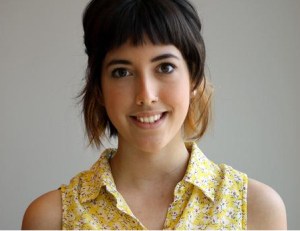
 Kaiti


Today, my friends Alison (an honest and passionate real estate agent) and Kaiti (an incisive and graceful designer and developer) convened our first Freelancers’ Lunch, an opportunity for a half-dozen (okay, seven) fun entrepreneurial types to talk about what we do, ask each other questions and seek advice, and see if any biz connections came readily to mind. (Yes, this was also the outgrowth of our semi-hashed summer experiment: Trying to Form a BNI Group in North Brooklyn. Only Alison succeeded with her burgeoning Influentials group. Go Alison!!)



I knew I’d have fun with these guys; I know them all (and many of them already knew each other) and was looking forward to having lunch with them no matter what. But I was truly surprised by how much we had to offer each other—especially considering how many of us were already friends!

  • A former intern of Claire’s might be able to do some work for Kaiti.
  • Alison knows someone working on a film that Mike could possibly do sound for.
  • Kaiti wants to introduce recording engineer Lily to a badass female bass player she knows.

The connections probably numbered in the dozens, and everyone took care to make actual notes to follow up (that’s right—I don’t do business with flakes).
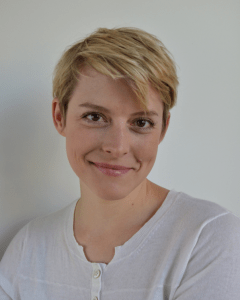
Claire Taylor Hansen Lily


And even beyond potential work introductions, people were batting a thousand:

“I’d like to meet a good mortgage broker…”

“Do you know of a good, free CRM?”

“What’s a nice restaurant downtown for client lunches?”

DONE.

We’re planning to convene again after the holidays, and will try to get a few more heads in the mix. Even though I’m a classic hippy-dippy, bleeding-heart people person, I admit I doubted the power of the personal network at the beginning of my freelance life. But I’ve gotten 90% of my rent-making business in the past year through personal connections, and 90% of my clients have been absolute joys to work with (the other 10% weren’t rotten, either).

So I can now personally attest to the professional as well as personal efficacy of keeping your relationships up. Talk to people you like: tell them what you need and listen to what they need. Then write it down and follow up.

Repeat. Enjoy.

More trees, fewer cows = Our best shot at climate change survival

One of my beloved clients is throwing a wonderful conference next Thursday and Friday at the beautiful Bronx Zoo called Wood at Work: Elegant Strategies for Architecture, City-Building, and Forest Conservation. The two-day affair will gather together some of the best minds in architecture, forestry, policy, ecology, and urban planning to talk about how sustainable wood use in cities can actually protect global forests and rural economies and cultures.

2015 Wood at Work conference

In addition to many brilliant presentations and panels, there will be beaucoup de time for informal conversation (and networking) over breakfast, lunch, snacks, and drinks. Plus super fun-sounding workshops like “Japanese Sawing” and “Tree Music”!

I’m not getting paid to say that if you’ll be in New York City and care about a) design or architecture, b) climate change, c) trees and forests, d) native cultures, or e) being in a room packed with brilliant, hard-working, potentially world-saving people, I think you should consider coming. Tickets are pretty cheap, and if you email me, I’ll even send you a magic code for 50% off!

Nice, but what does all of this have to do with cows?, you ask (as you hastily go to the Wood at Work website to purchase a ticket). Perhaps surprisingly, a lot!

As the great Jeremy Radachowsky of the Wildlife Conservation Society explains in a story he just wrote for National Geographic:

Oregon forest by McD22 on Flickr

Flickr’s McD22 captures some Oregonian forest grandeur

There are two existing [climate change-related] technologies that are ready to be acted upon today, whose collective impact could be larger than any future technological breakthrough.

The first technology is a 400-million-year-old solar-powered device that extracts CO2 from the atmosphere and converts it into material useful for construction, essentially “printing” solid materials layer by layer like a 3D printer until a finished product up to 300 feet tall is achieved. Once deployed, the device requires no human input – just water, sunlight, and molecules found in most soils.

This technology is called the “tree.”

A more recent technology extracts tons of carbon already trapped in vegetation and converts it into a small amount of protein-rich food for human consumption. Along the way, large quantities of climate-damaging gasses are emitted. In the moist tropics, the process also requires the clearing of climate-friendly forests and is ten times less efficient than many other methods of food production.

This technology is called the “cow.”

Cows were domesticated by humans more than 10,000 years ago and made sense in the context of a small human population and abundant resources. However, in an era of high population density and climate change, cattle are now an antiquated and obsolete solution to today’s environmental and food security issues. Trees, on the other hand, remain vital to our continued existence.

Makes sense, right? Plus, now that vegan food has gotten so plentiful and delectable, our excuses for massive meat consumption have dwindled to all but nil.

Jeremy’s going to give a talk titled “Trees, Not Cows” on Friday, October 30 at Wood at Work. Come listen with me, then we can share our thoughts over something delicious that’s not beef.

Buy my poetry for $1!

Hello several friends who subscribe to this blog!

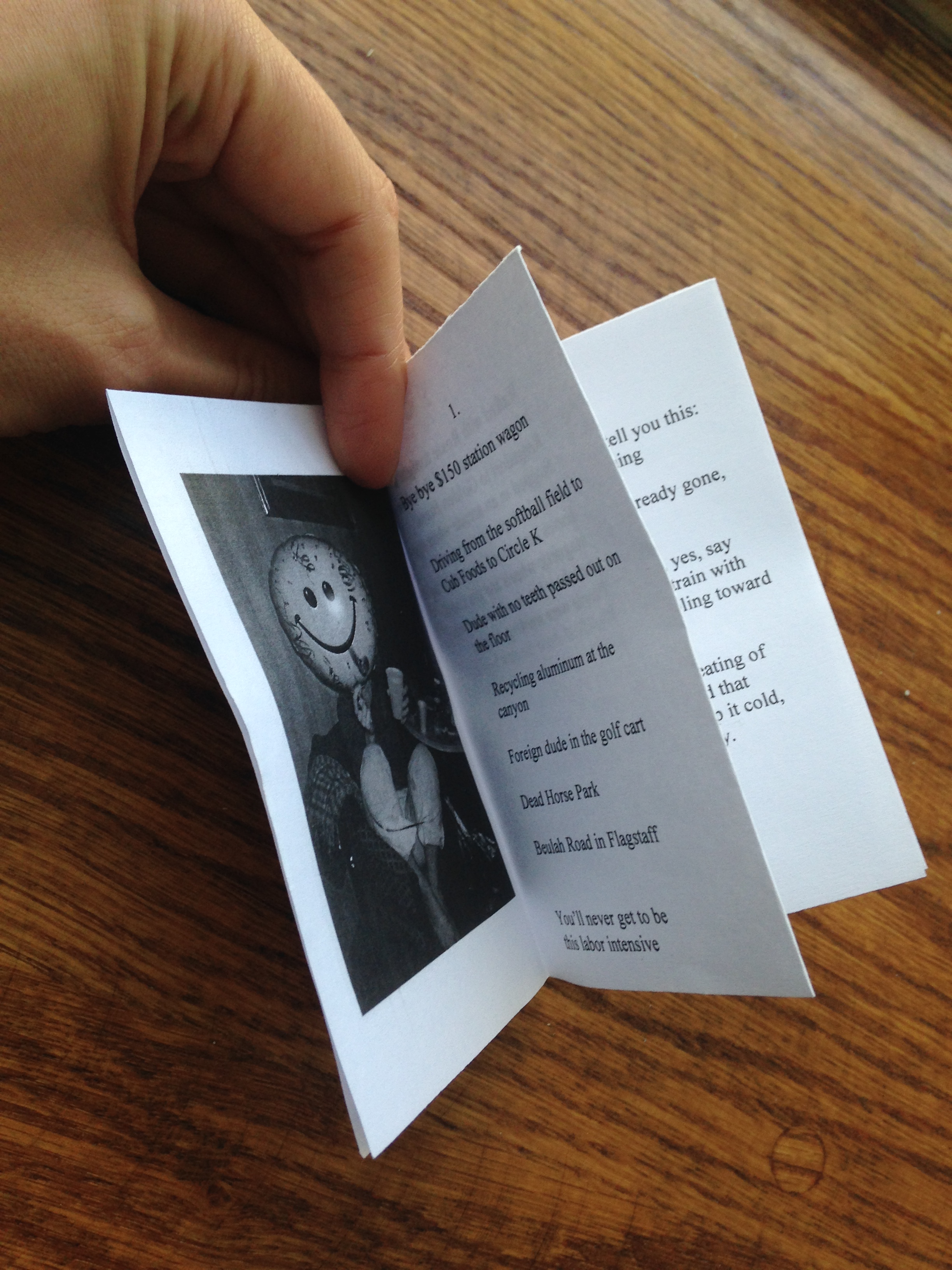
As you already know, because I cannot conceal my outsize pride about this little project, my tiny poetry books are here!

22143492495_44436f53c8_o21522381523_7dc2ee2ec0_o


One 8.5 x 11 sheet—skillfully folded and packed to the gills with strange journal clippings and b&w photos from a 28th birthday party in a hotel room in Queens and from Trees of Mystery in approximately the same year—can now be yours for the low, low price of $1 cash.

Did I mention they’re hand-numbered in gold-tone ink on the back??

Just drop me a line and I’ll give you my address. Send me a dollar in cash, and I’ll mail a book back to you. Easy peasy.

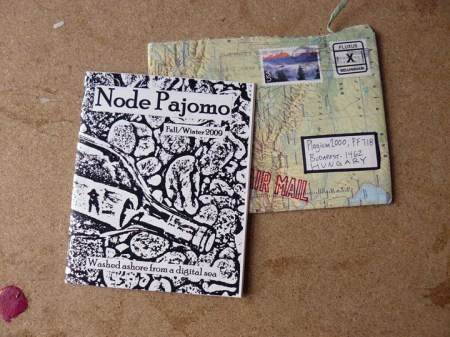
I may never rise to Node Pajomo-like levels of mail art greatness, but I am happy to be dipping this first toe in the water. Thanks for deigning to join me!

Last week’s Mashable Social Good Summit was pointless

I’m sort of cringing at that snippy, click bait-y title, but it really was not good.

I’d heard about this annual social good event for the past few years, but hadn’t had occasion to go. Then a friend of mine, who’s launching a new design and social good conference in Portland next year, asked if I would attend this year’s program in her stead and give her notes.

I was genuinely interested. Also, I’m sure I don’t need to say that when you offer a freelance writer a free ticket to something, she’ll always go. So I went.

A (good) freelance writer will also always try to show-not-tell you about their experience. So here’s what I saw, as reported to my notebook during the event:

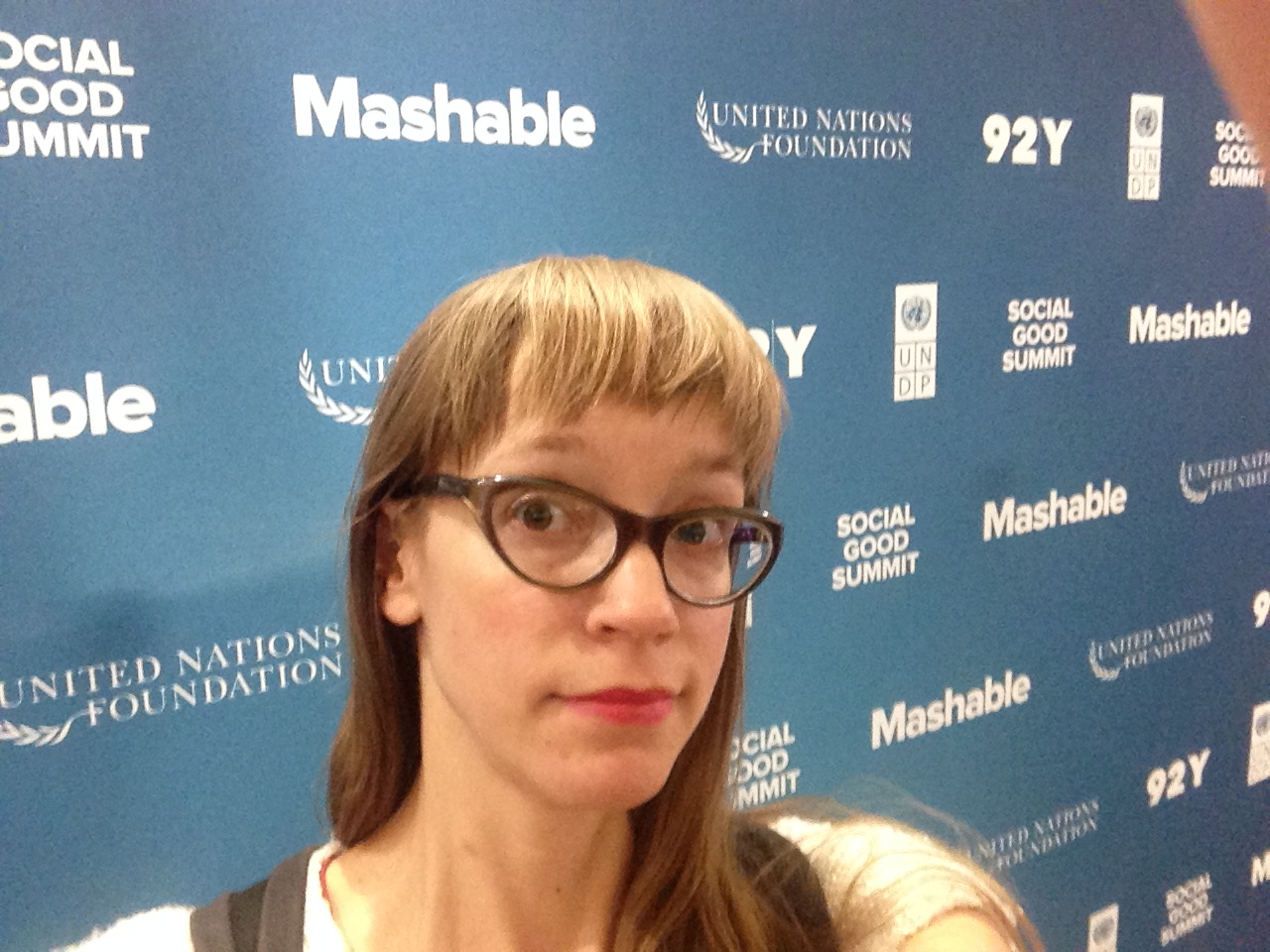
At least they had one of those celebrity backdrops you could stand in front of.

At least they had one of those celebrity backdrops you could stand in front of.

  • “Objectively meaningless two-minute video where the UN’s Sustainable Development Goal flags are waving around groups of ethnically-diverse children.”
  • “Opening ceremony = brief introductions to each of the SDGs by celebrities Victoria Beckham, the clock/”bomb” kid, Adrian Grenier, a taped speech by Jennifer Lopez… This is not helpful or interesting! Just a parade of celebrities.”
  • “The Digital Media Lounge appears to be a room with a bunch of tables where people are using laptops and there’s a screen projecting the live program happening in the auditorium. The lounge is where the coffee and snacks are, too, which was not explained to us before.”
  • “Did the conference website crash, or is the wifi in here just getting deluged? Been 10 minutes and it hasn’t loaded.”
  • “Moderator: ‘These kids will be leading this summit 15 years from now.’ Yawn.”
  • “Panel participant: ‘Social media is used by young people, who are going to be the ones driving change for the next decades, so we need to use and pay attention to social.’ Is this news??”
  • “There is a panel called ‘Champions of the Earth.’ “
  • “I see people with pizza, and I smell pizza. I guess we got pizza! No instructions or explanations. It’s like a secret!”
  • “I’m not sure who’s here, or why. There was no chance to network—other than waiting in line for the bathroom, which I did—and I’m left with no sense of who would come to this. Starting to think it was just a bunch of UN moles!!”
  • “Closing remarks were compassionately brief. We were asked to leave the auditorium immediately afterward.”

I could go on, but I don’t want to embarrass anyone, exactly. And there were some gems:

A deservedly tired Bill McKibben spoke about, among other things, the similarities between tobacco and oil companies when their jigs have been up.

Moxie Marlinspike issued the very interesting thought that laws should be difficult to enforce: “How would we know that public opinion and demand was swaying in support of same-sex marriages if no one had ever seen an ‘illegal’ same-sex relationship in public? Same goes for marijuana legalization in Washington and Colorado. We need to see how people act outside of what they’re told to do by laws in order to see what they’re really like; what they really want and need.”

Lara Logan was a tough and smart moderator who brought needed rigor and vigor to her discussions.

But overall, I was surprised by how much time and care went into something that wound up being so banal and providing such little value. My peanut gallery tips to conference organizers of the future:

  • Make it concrete, not conceptual. Statistics and stories can be useful; platitudes are not.
  • For the love of god, build time to network into your schedule. No one wants to go to a conference, sit for six hours, then go home. Networking is half the point.
  • Either tell us to bring a lunch, or tell us there will be food (and preferably what and where and when, too). Also for the love of god.

That’s it. No hard feelings, Mashable (although I can’t recall seeing anything on your site that’s really grabbed me, either). Just… sayin’.

Who’s the greenest of them all?

Trick question—it’s me! Well, I’m the Greene-est, I guess.

But I’ve had the pleasure of making acquaintance with some other super-green folks lately: Eric Duchon and Akanksha Sharma, two of too-many-to-count members of the Urban Green Council, the New York chapter of the U.S. Green Building Council.

A building in NYC’s meatpacking district, ripe for an environmental retrofit! (courtesy Professor Bop, Flickr)

I started writing for Urban Green this past June and have been having a particularly good time with the member-profiling assignments.

Why? Because Urban Green members say the greenest, most interesting things!

EricEric:
“I’m always bumping into people on the street—not because I’m looking at my phone, but because I’m looking at buildings. ‘Are they doing a window replacement up there?’ I think to myself. Or, ‘Why are there so many halogen MR16s in this restaurant? Don’t they know there are incentives for LED bulbs that could save them so much energy?’ ”

Akanksha

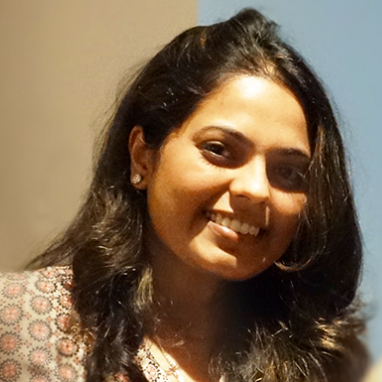
Akanksha:
“Initially, sustainability is not the smoothest path in terms of career stability! It’s not like other career paths that go by the book. But there is a lot of room to innovate, and it’s engaging and rewarding because you have to drive yourself. You have to constantly recalibrate your approach so you’re attuned to what’s out there now.”

If I weren’t already happy with my job as a writer—and if I believed I had even a whit of the ingenuity, agility, and skill required—I’d consider endeavoring to join Eric and Akanksha’s esteemed ranks as city- and world-bettering Sustainability People.

As it is, I’ll just enjoy writing about them.

Cops, doughnuts, and the evolving streets of L.A.

If you haven’t watched Locavesting founder Amy Cortese’s 2012 TEDxMaui talk, you might want to check it out. Amy is a longtime and award-winning journalist, book author, public speaker, and all-around very cool person, these days mostly focused on the topics of crowdfunding and community.

Locavesting

In 2011, she published Locavesting: The Revolution In Local Investing And How To Profit From It, which chronicles the local investing movement and explains how even small investment shifts away from multinational companies and toward locally-owned enterprises could reap enormous economic and social benefits for individuals, their communities, and the country.

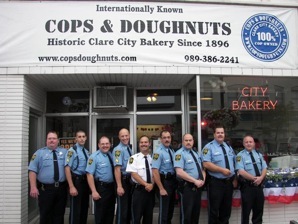
Oh, and at around the five-minute mark of her TED talk, Amy tells the story of “the cops in Clare, Michigan that saved their town’s 111-year-old bakery—and revitalized their downtown in the process.” I’ll let her deliver most of the rich details, but can’t help letting you know that these guys renamed the place “Cops & Doughnuts” and started selling “Don’t Glaze Me, Bro!” t-shirts!

All of the above made me feel honored to write a story for the Locavesting website recently, about how Los Angeles Mayor Eric Garcetti is partnering with national nonprofits like ioby and local orgs like the Ride On! Bike Coop to plan and fabricate L.A.’s next generation of more human-friendly city streets, using a fiscally-viable, community-led process. It’s inspiring stuff!

I invite you to read up, watch at your leisure, and invest locally. See you at the doughnut shop!

Cops and Donuts

What Trisha Brown calls the “bees going into your face” part

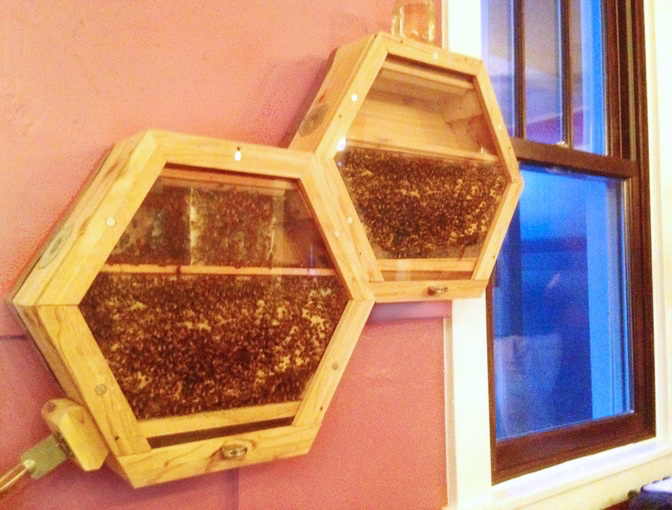
In June, I had the pleasure of writing for one of my clients about BEEcosystem, a modular honeybee hive made for today’s urban lifestyles. It sits inside your apartment!! You let the bees out to frolic and pollinate through a tube. You have to see it; it’s great.

BEE

BEEcosystems at work in State College, PA

I interviewed the invention’s founders, awesome Pennsylvania dudes Mike Zaengle and Dustin Betz (I really do love Pennsylvania), and they had lots of interesting and important things to say about reestablishing our connection to the origins of our food, Colony Collapse Disorder, and how one in every three bites we eat was probably produced by a pollinator.

But what’s stuck in my mind most since then was Mike saying, “I had thought being outside in the yard with the BEEcosystem tube coming through the window might make me nervous, but after I worked with honeybees for a while, I realized they’re much friendlier than I thought. You can definitely walk around doing yard work all afternoon and they won’t bother you!”

Hot damn.

BEEcosystem is in the midst of a Kickstarter campaign to get this shizz off the ground. Throw a little dough their way, honey, and help grow the buzz!

Oh, and what was that about Trisha Brown at the beginning? It’s an all-but-unrelated quote (especially now that Mike’s weighed in about the bees not going into your face) from a wonderful interview with her by the inimitable M.J. Thompson—titled “Dancing? ‘It’s Awesome’ “—in one of my erstwhile stomping grounds, The Brooklyn Rail. I read it in 2009 and haven’t forgotten it. An excerpt:

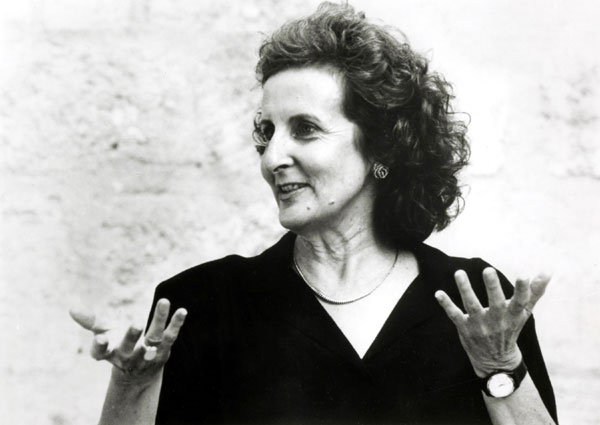
Bob [Rauschenberg] and I were very close. I had the best dialogues with him. Bob had a fix on me like no one else. He called me at least once a week, especially when he was in New York, and said, “I’ve got an idea for you.” And I’d say, “Wait, I’m already working on the piece. Write it down, save it for me. And if you have another urge to talk to me call my office, it’s four in the morning.” He had a sterling vision [Thinking for a moment, then demonstrating: hands and arms cutting downwards quickly, away from her face]. Do you remember that part? What I call the “bees going into your face” part? I was working the edges of what was acceptable but at the same time the piece was a study in structuralism and scale and bees going into face.

Trisha

Love you, Trisha! (photo from artsalive.ca)

Teach a 20-something punk to write a good memo, and she’ll write good memos for life

For a couple of fun, lucky years in my 20s, I worked as assistant to the director at the Asian Cultural Council (ACC), a grantmaking nonprofit that awards cultural exchange fellowships to artists and scholars from the U.S. and Asia.

Looking for a tear-jerker with great music? Look no further!

As well as being fun, the ACC is an extremely classy place, so not only did I get to attend the super-cool performances and openings of loads of top-shelf international artists, I also honed a grip of executive-level writing skills (first forged at ACC’s sister foundation, the venerable Trust for Mutual Understanding) that I find myself coming back to quite often as a full-time freelance provider of editorial services to nonprofits. Skills like:

  • ghostwriting correspondence and statements for a VIP
  • culling meeting notes down from chaos to the essentials
  • drafting invitations to donors that made giving us loads of money sound like a treat
  • and more!

This past spring, I was extremely stoked to see an email from ACC’s current director in my inbox. She said they had some writing and editing needs on the horizon, and wondered if I might be available to help. I couldn’t say yes fast enough.

Almost six months later, I’m still having a blast popping in on my old workmates in the office, reacquainting myself with all the great things they work on, and helping them craft communications—like this—that speak to the gravity and longevity (and yes, the fun) of what they do. (If you peruse that newsletter, check out the story about Cloud Gate Dance Theatre of Taiwan. Definitely my favorite to write.)

You never know when an old skill—or old friends—will show up in your life again. But unless that skill is effectively squandering time or that friend is a psychotic clown, chances are you’ll be pleasantly surprised!